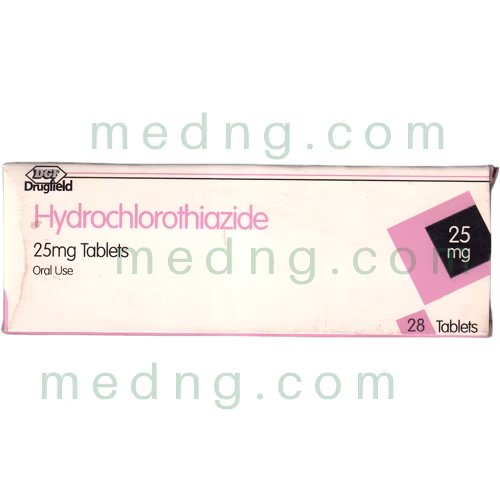
Hydrochlorthiazide 25 mg tabl. #28
Manufacturer: DrugField Pharmaceuticals Limited , Nigeria
Composition: hydrochlorothiazide 25.0 mg
How does hydrochlorothiazide work?
It's a thiazide diuretic that inhibits sodium reabsorption in the kidneys, leading to increased excretion of sodium, water, potassium, and hydrogen ions. Its antihypertensive action is thought to be related to altering sodium balance.
What are the short-term and long-term effects of hydrochlorothiazide on the body?
Short-term effects include decreased cardiac output and reduced blood volume. Long-term effects include normalization of cardiac output, decreased peripheral vascular resistance, and a persistent reduction in extracellular water and plasma volume.
What is the relationship between sodium depletion and the antihypertensive effect of hydrochlorothiazide?
Sodium depletion caused by hydrochlorothiazide appears to be the primary factor responsible for decreased peripheral vascular resistance, which contributes to its antihypertensive action.
What are the most common side effects of hydrochlorothiazide?
Electrolyte depletion, such as hypokalaemia, hypochloraemia, hyponatraemia, and dehydration.
What are some other potential side effects of hydrochlorothiazide?
Dizziness, vertigo, paraesthesiae, headache, yellow vision, leucopenia, agranulocytosis, thrombocytopenia, aplastic anaemia, haemolytic anaemia, hypotension, orthostatic hypotension, purpura, photosensitivity, rash, urticaria, fever, respiratory distress, anaphylactic reactions, hyperglycemia, glycosuria, hyperuricaemia, and electrolyte imbalance.
What special considerations should be taken when administering hydrochlorothiazide to the elderly?
Careful dose adjustment based on renal function and clinical response is crucial due to increased susceptibility to electrolyte imbalances.
What are the signs and symptoms of hydrochlorothiazide overdose?
Electrolyte depletion and dehydration due to excessive diuresis.
How is hydrochlorothiazide overdose managed?
Symptomatic and supportive measures, including inducing emesis or gastric lavage, correcting dehydration and electrolyte imbalance, and addressing hepatic coma and hypotension. Oxygen or artificial respiration may be needed for respiratory impairment.
What are the known risks of using hydrochlorothiazide during pregnancy?
Foetal or neonatal jaundice, thrombocytopenia, and other adverse reactions observed in adults.
Why is the routine use of diuretics not recommended in pregnant women?
It may be associated with hypovolemia, increased blood viscosity, and decreased placental perfusion.
Is hydrochlorothiazide safe for breastfeeding mothers?
Hydrochlorothiazide appears in breast milk. If its use is deemed essential, breastfeeding should be discontinued.
How is hydrochlorothiazide absorbed?
It is absorbed from the gastrointestinal tract, primarily in the upper small intestine. Absorption is dependent on intestinal transit time, being increased when the transit time is slow.
How is hydrochlorothiazide distributed in the body?
It is widely distributed in body fluids and is extensively bound to plasma proteins, particularly albumin.
How is hydrochlorothiazide eliminated from the body?
Most of it is excreted unchanged in the urine, with more than 96% appearing in the urine within 3-6 hours after an oral dose.
What conditions is hydrochlorothiazide used to treat?
Mild to moderate hypertension, oedema associated with congestive heart failure, hepatic cirrhosis, premenstrual tension, and various forms of renal dysfunction.
Can hydrochlorothiazide be used in combination with other antihypertensive medications?
Yes, but dosage adjustments may be necessary to avoid excessive blood pressure drops.
How is the dosage of hydrochlorothiazide determined?
It is individualized, using the lowest dose necessary to achieve the desired effect.
What are the usual starting doses of hydrochlorothiazide for oedema and hypertension?
For oedema: 25-100mg daily. For hypertension: 25mg daily.
What are the recommended starting doses for children and infants?
Children: 2.5mg/kg body-weight daily in 2 divided doses. Infants under 6 months: up to 3.5mg/kg a day. Infants up to 2 years: 12.5-37.5mg a day. Children from 2 to 12 years: 37.5-100mg a day, all in divided doses. Dosage should be based on body weight.
When is hydrochlorothiazide contraindicated?
Hypersensitivity to hydrochlorothiazide, other thiazides, or sulfonamide-derived drugs, anuria, severe renal and hepatic failure, Addison's disease, hypercalcaemia, current lithium therapy.
What medications may interact with hydrochlorothiazide?
Alcohol, barbiturates, or narcotics may potentiate orthostatic hypotension. Oral and parenteral antidiabetic drugs may require dosage adjustments.
What foods and herbs may interact with hydrochlorothiazide?
Peak serum levels may be decreased if taken with food. Avoid dong quai, ephedra, ginseng, yohimbe, and garlic.
What monitoring is required for patients taking hydrochlorothiazide?
Careful monitoring for signs of fluid and electrolyte imbalance.
How can hypokalaemia be prevented or treated?
Concurrent use of amiloride HCI, potassium chloride, or foods with high potassium content.
What precautions are needed for patients with impaired hepatic function?
Use with caution due to the risk of precipitating hepatic coma.
What precautions are needed before performing parathyroid function tests?
Thiazides should be discontinued before the tests.
How should hydrochlorothiazide tablets be stored?
Store below 30°C, protected from light and moisture. Store tablets in blisters in the provided carton.
What is the price of Hydrochlorthiazide 25 mg tabl. #28?
The price of Hydrochlorthiazide 25 mg tabl. #28 is ₦ 375.00, exclusively for online orders through the Intaila mobile application